

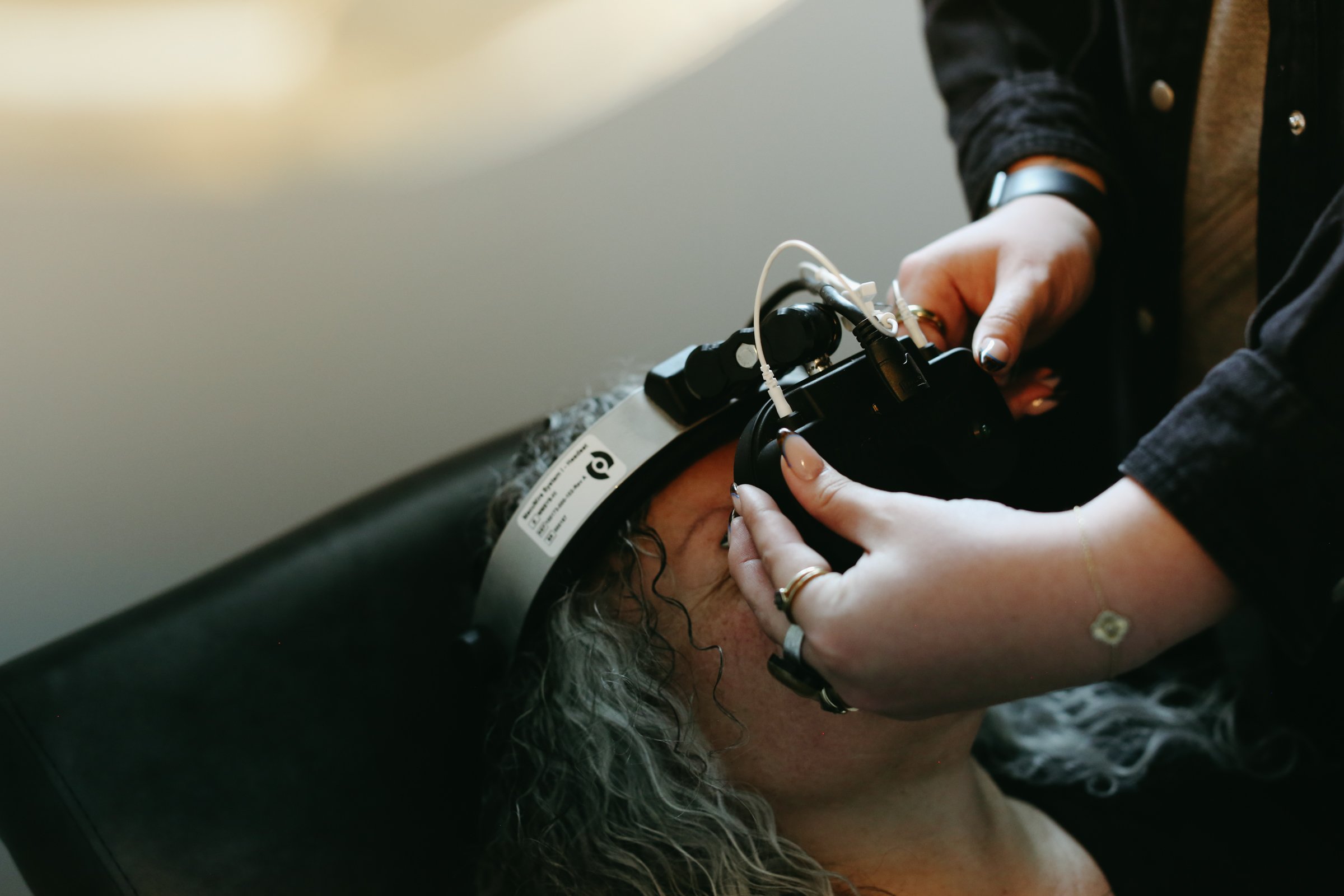
MacuMira treatment for dry AMD with non-invasive eyelid surface neurostimulation
If you or someone you love has been living with dry age-related macular degeneration (AMD), you've probably heard "there's not much we can do" more times than you'd like. For a long time, that was mostly true. But there's a newer treatment option called MacuMira that's changing that conversation — and naturally, it comes with a lot of questions. So let's dig into the FAQs.
What is Dry AMD, quickly?
Dry AMD is the most common form of age-related macular degeneration, making up roughly 85–90% of AMD cases. It happens when the macula — the part of your retina responsible for sharp, central vision (think reading, faces, driving) — gradually thins and becomes less functional over time. It often develops slowly and without obvious early symptoms, which is part of why regular eye exams matter so much.
What is MacuMira?
MacuMira is a non-invasive, drug-free, Health Canada-approved treatment designed specifically for dry AMD. It uses gentle, low-level microcurrent stimulation delivered through your closed eyelids (no needles, no surgery) to stimulate the retinal pigment epithelium — the layer of cells that support your retina's health. The idea is to boost cellular energy production in that layer, helping to preserve or even improve visual function.
How does it actually work in-office?
A typical MacuMira session takes about 30 minutes and involves wearing a headset-style device over closed eyes while it delivers the microcurrent stimulation. There's no cutting, no injections, and no downtime afterward — you can generally go about your day right after a session.
Treatment usually follows a two-part structure:
A loading phase: a short series of sessions close together to start the process
A maintenance phase: periodic follow-up sessions afterward to help sustain results
Your eye care provider will walk you through the specific schedule that fits your situation.
Does it actually work?
Early research is genuinely encouraging. Clinical studies — including trials conducted here in Canada — have shown measurable improvements in visual acuity and contrast sensitivity in dry AMD patients following MacuMira treatment, with benefits maintained for months after the initial treatment phase. That said, like any newer treatment, results can vary from person to person, and researchers are still gathering longer-term data.
Is everyone with dry AMD a candidate?
Not necessarily. Response tends to vary based on factors like the stage of your AMD and whether central geographic atrophy is present. MacuMira also isn't suitable for everyone — for example, people with certain implanted electronic devices (like pacemakers) or a history of epilepsy typically aren't candidates. The best way to know if it's right for you is a conversation with your eye care provider, who can assess your specific eyes and history.
Is it covered by insurance?
Currently, MacuMira is not a provincially insured treatment, and coverage through private insurance plans varies. It's worth checking with your provider directly, but many patients pay out of pocket for treatment.
Is it safe?
MacuMira is Health Canada-approved, and studies to date haven't reported significant adverse effects. As with any treatment, your eye care provider will review your health history first to confirm it's a safe fit for you.
Will it cure my AMD?
No — and it's important to be upfront about that. There's currently no cure for dry AMD. What MacuMira offers is a way to potentially support and improve visual function for people living with the condition, which, for a disease that's historically had very few options, is a meaningful step forward.
How do I find out if MacuMira is right for me?
The best place to start is a conversation with your optometrist. They can review your eye health, discuss whether you're a candidate, and walk you through what treatment would look like for your specific situation.
Curious whether MacuMira could be an option for you or a family member? Get in touch and we'll help you figure out the next step.
ina at the back of the eye. It is responsible for our central vision, most of our colour vision and the fine detail of what we see.2
AMD can progress slowly in some people, and its early stages almost always have no noticeable symptoms3. However, it can also progress rapidly. AMD tends to affect older people4, though there are rare cases when younger people are affected — usually related to an underlying condition.