
Restore vision after Dry AMD with MacuMira
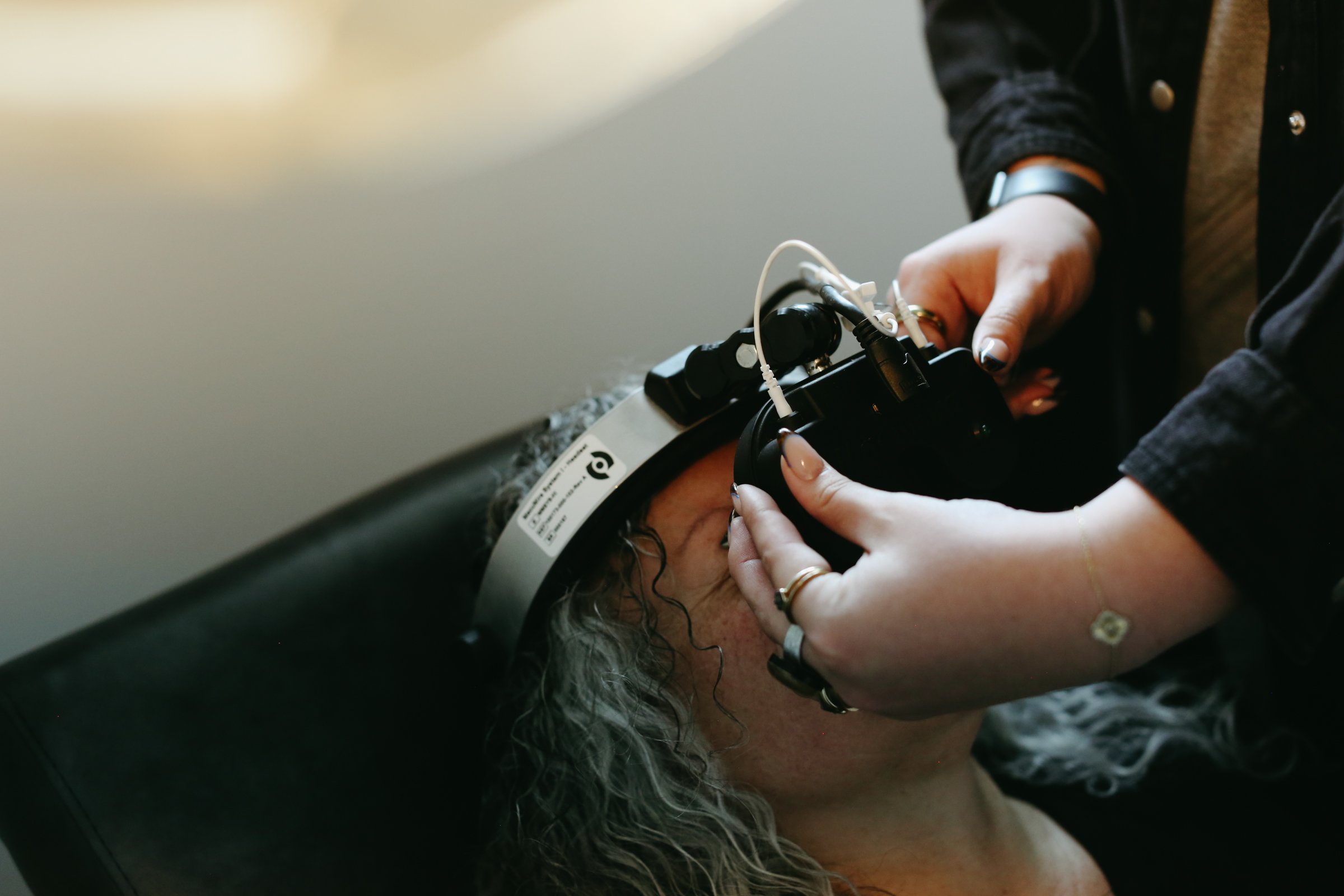
MacuMira treatment for dry AMD with non-invasive eyelid surface neurostimulation
A painless & non-Invasive Treatment
Macumira offers a revolutionary solution that allows you to restore your vision and renew your life, providing a brighter outlook on the world. Our macular degeneration treatment is designed with your safety and comfort in mind, ensuring a pain-free experience under the care of your local eye-care professionals. With short and easy treatments, you’ll witness a significant improvement in your vision. Don’t wait any longer to regain your sight, take the first step towards a clearer future.
Our pain free, non-invasive treatments are helping people with dry age-related macular degeneration (dry AMD), see again
After the age of 45, 9% of the population will suffer from vision loss due to dry AMD.
Over time your vision loss intensifies and your quality of life declines as you lose your independence and ability to to perform everyday tasks such as, driving, reading and recognizing faces.
Current treatments aimed at slowing the progression of dry AMD include lifestyle changes, supplementation with nutraceuticals and regular eye injections.
AMD is the leading cause of adult blindness.
MacuMira is the first clinically proven treatment option providing a safe, easy and effective way to restore and improve your vision.
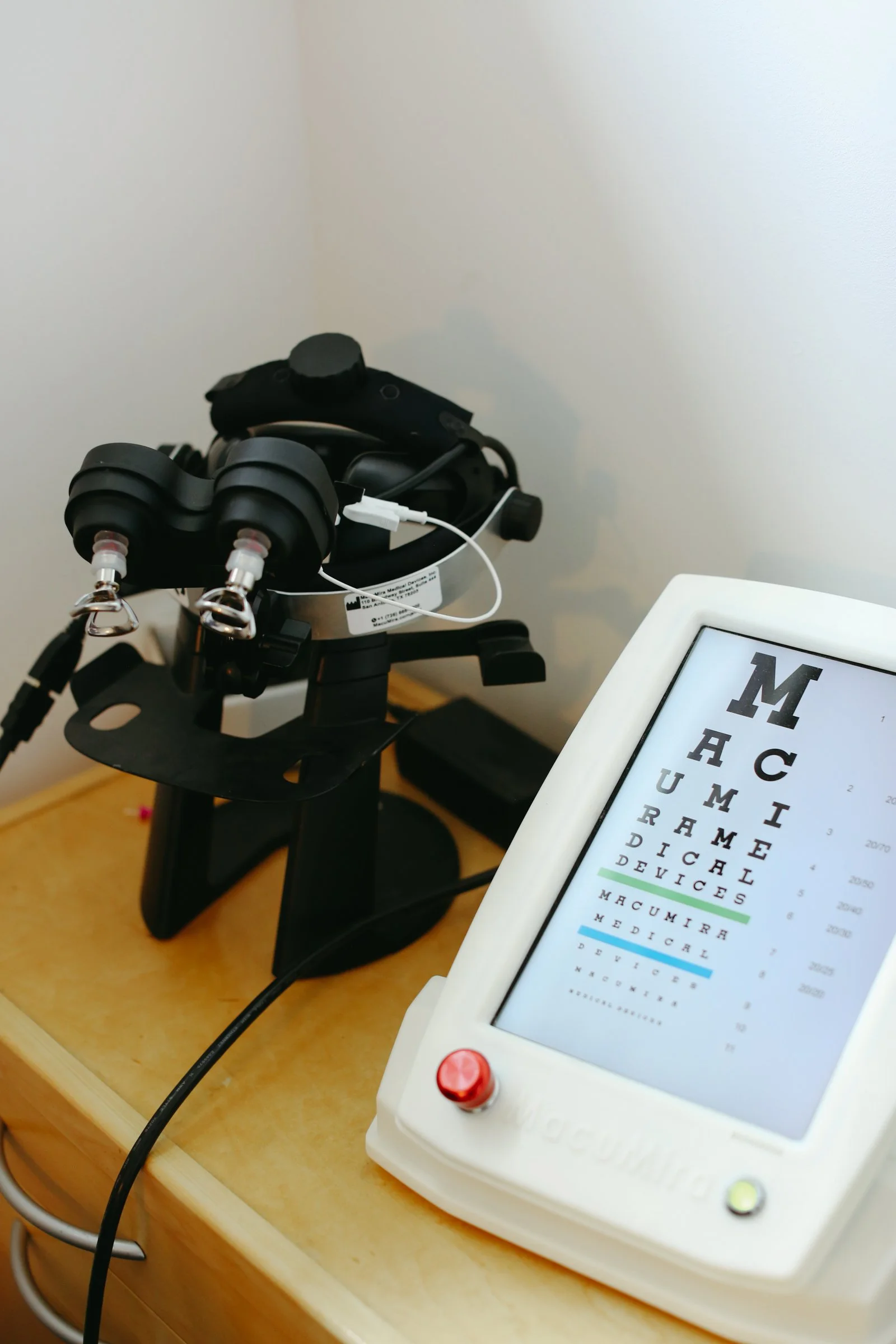
MacuMira treatment for Dry AMD
About the Treatment
Microcurrent Stimulation
Easy, safe, and effective. MacuMira uses gentle microcurrent delivered through your closed eyelids, stimulating the retina. It’s designed to improve and preserve vision in patients with dry AMD.
Improved Vision
Many patients notice vision improvement within the first 10 days of treatment. To maintain those gains, eye care providers typically recommend one follow-up treatment every 3 months.
Painless In-Office Therapy
MacuMira does not require needles, medications, lasers, or surgery. Patients simply visit their MacuMira provider, relax while wearing the MacuMira device, then get back to their day.
· 4 treatments in 10 days
· Maintenance of 1 treatment every 2-3 months
What is Dry AMD?
Age-Related Macular Degeneration (AMD) is a disease of the eye, and the leading cause of vision loss in older adults. It’s estimated 2.5 million Canadians suffer from some form of AMD.1
It begins when a part of your retina called the macula becomes damaged. The macula is part of the retina at the back of the eye. It is responsible for our central vision, most of our colour vision and the fine detail of what we see.2
AMD can progress slowly in some people, and its early stages almost always have no noticeable symptoms3. However, it can also progress rapidly. AMD tends to affect older people4, though there are rare cases when younger people are affected — usually related to an underlying condition.
What are the symptoms of Age-Related Macular Degeneration?
In early-stage AMD, you often will have no recognizable symptoms. However, AMD is a progressive disease, meaning it gets worse over time. The early noticeable symptoms tend to be slight blurring in your central vision, straight lines appearing slightly blurry, and trouble performing tasks like reading or driving in low light.
In its later stages AMD, central vision can become very blurry or completely dark. Straight lines become very wavy and tasks like reading and recognizing faces becomes difficult5.
AMD does not necessarily affect both eyes; it can also affect one, or both at different rates of progression.
Because AMD affects central vision, it does not lead to total blindness. However, in advanced stages it can significantly compromise quality-of-life.
Early-stage Symptoms
The early stages of AMD have no noticeable symptoms, though a health-care professional can help detect it with testing.
Intermediate-stage Symptoms
Sometimes, people with more advanced thinning of the macula are asymptomatic
Slight blurriness in the centre of your vision
Difficulty seeing in low light
Late-stage Symptoms
Significant blurring or dark spots in central vision
Straight lines can appear very wavy
Dulling of colours
What factors put people at risk for AMD?
It is not known exactly what causes AMD, but there are known factors that put people at risk.
Risk factors for Age-Related Macular Degeneration
Increased age
Extensive UV light exposure
Cardiovascular disease
A diet high in saturated fat (foods like butter, fatty meat, and cakes)
Smoking